Iced In: The Actions and Impacts of U.S. Immigration and Customs Enforcement (ICE) in Massachusetts in 2025

The Leah Zallman Center for Immigrant Health Research (LZC) is proud to release Iced In: The Actions and Impacts of U.S. Immigration and Customs Enforcement (ICE) in Massachusetts in 2025. This report records, validates, and publicizes the experiences of families and institutions in Massachusetts during this turbulent time of increased ICE enforcement.

Preparing Clinicians to Conduct Forensic Medical and Mental Health Evaluations for People Seeking Asylum

Emery E, Snyder SA, Wen JX, Basu G, Santos J, McCormick D, Kallivayalil D. Preparing Clinicians to Conduct Forensic Medical and Mental Health Evaluations for People Seeking Asylum.…

Spotlight on Intersectionality: Advancing Immigrant Inclusion and Health

In partnership with Northeastern University's Migration and Health Initiative, LZC is proud to release our latest Spotlight Brief on Intersectionality: Advancing Immigrant Inclusion and Health.

Spotlight on Mental Health: Restructuring Care for Immigrant Families

The Leah Zallman Center for Immigrant Health Research (LZC) at the Institute for Community Health is proud to release Spotlight on Mental Health: Restructuring Care for Immigrant Families. We believe community knowledge, social science, and socio-political context provide valuable insights to understand how health and equity are structured in our current world. Our Spotlight Series is designed to brief readers about time-sensitive issues related to immigrant health, shine a light on findings from our research and the work of our partners, and encourage cross-sector dialogue and action for social change.

Weaving Well-being: A Case for Immigrant Community-Driven Mental Health

Weaving Well-being: A Case for Immigrant Community-Driven Mental Health details outcomes and findings from the second iteration of the City of Boston Mayor's Office for Immigrant Advancement's (MOIA) Weaving Well-being Initiative. 

Nutrition in Housing Micro-Report

The Leah Zallman Center for Immigrant Health Research (LZC), the Institute for Community Health, and No Kid Hungry are proud to jointly release the Nutrition in Housing Micro-Report. The Nutrition in Housing (NIH) program implemented by Share Our Strength — No Kid Hungry in collaboration with NHP Foundation and Mercy Housing strengthened existing partnerships and developed new nutrition-oriented programs to improve the food environment and nutrition knowledge in affordable housing settings within food deserts in four U.S. cities.

Spotlight on Access to Care: Immigrant Access to Health Care in Massachusetts

In this Spotlight, we provide an overview of Massachusetts’ current eligibility landscape and outline the barriers that immigrants face when they seek access to quality care, highlighting the case of the Brockton Workers Alliance. Drawing on Dr. Leah Zallman’s legacy, we note the contributions that immigrants make to our society’s public healthcare infrastructure, pointing out the intrinsic unfairness of immigrants being denied access to a service to which they contribute. We then provide some examples of policy initiatives and actions that either restrict or expand immigrant access to care and end with suggestions regarding further cross-sector collaboration for health equity.

From Fear to Trust

The Leah Zallman Center for Immigrant Health Research (LZC) at the Institute for Community Health and No Kid Hungry are proud to jointly release From Fear to Trust: Community-led Solutions to Increase Food Access in Immigrant Communities and the accompanying Spanish translation, Creando Confianza: Soluciones Comunitarias para Aumentar el Acceso a los Alimentos en las Comunidades de Inmigrantes. The report shares findings from a one-year study of No Kid Hungry's public charge grants initiative, which provided more than $1 million to community-based organizations working to increase food security and rebuild trust in Latino and other immigrant communities.

Manchester, NH, ESOL Needs Analysis

In collaboration with Southern New Hampshire University’s Center for New Americans and the New Hampshire Equity Collective (EqColl), the Leah Zallman Center for Immigrant Health Research (LZC) at the Institute for Community Health is proud to release Manchester, New Hampshire, ESOL Needs Analysis: Thematic Synthesis. The thematic synthesis summarizes key themes and findings from the needs analysis that LZC conducted of English language learners in Manchester, NH. LZC and EqColl collected data from 109 English language providers and learners in Greater Manchester through key informant interviews, storytelling, and focus groups. Common themes expressed by providers and immigrant and refugee English learners include a desire to integrate in their communities, hopes for free higher-level English classes, and a need for greater coordination of the English for Speakers of Other Languages (ESOL) landscape in Manchester.

Spotlight on Asylum: Health Equity and Care for Asylum Seekers in Massachusetts

The Leah Zallman Center for Immigrant Health Research (LZC) at the Institute for Community Health is proud to release Spotlight on Asylum: Health Equity and Care for Asylum Seekers in Massachusetts. We believe community knowledge, social science, and socio-political context provide valuable insights to understand how health and equity are structured in our current world. Our Spotlight Series is designed to brief readers about time-sensitive issues related to immigrant health, shine a light on findings from our research and the work of our partners, and encourage cross-sector dialogue and action for social change.

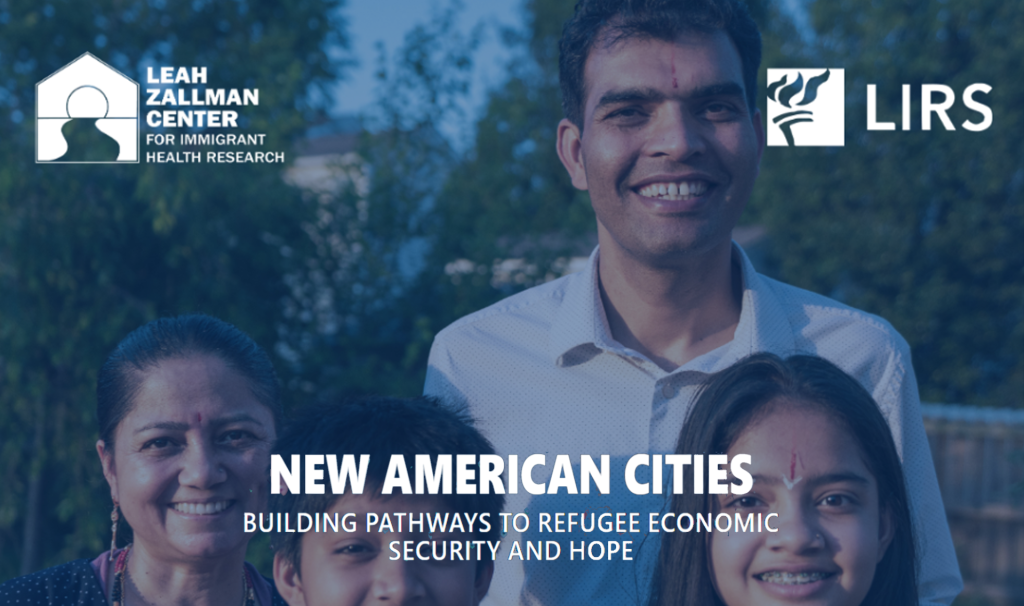
New American Cities

The Leah Zallman Center for Immigrant Health Research (LZC) at the Institute for Community Health and Lutheran Immigration and Refugee Service (LIRS) are proud to jointly release New American Cities: Building Pathways to Refugee Economic Security and Hope. The report shares findings from a two-year study of LIRS' flagship New American Cities (NAC) program, a workforce development initiative focused on moving refugee and immigrant workers into family-sustaining jobs so that they can achieve economic self-sufficiency and career advancement. Findings show that New American Cities boosted refugees’ career trajectories, economic security, and hope, creating more prosperous communities. Many refugees and immigrants bring a wealth of education and job skills with them to United States but tend to be underemployed due to refugee employment programs that have historically lacked the resources and infrastructure to provide career advancement opportunities. In 2021, LIRS sought to address this issue by launching a two-year pilot program to enhance collaboration between local governments, workforce centers, employers, and resettlement agencies. New American Cities filled a gap; approximately 60% of those who completed the program secured new jobs or advanced in their careers. Of those who entered the New American Cities unemployed, job placements resulted in average hourly wages of $19.63. Those who entered employed but were making less than the federal poverty line, saw their average hourly wages increase by 41%, from $13.56 to $19.08. Finally, those who entered the program earning more than the federal poverty line saw average hourly wages increase by 19%, from $19.84 to $23.53. The report also provides a community-level portrait of program sites in Baltimore, MD; Denver, CO; Fayetteville, AR; Jacksonville, FL; and Utica, NY; outlines components of the program’s model that add value to workforce programs and cities; and calculates New American Cities’ return on investment to participants and communities. On average, participant tax contributions after one year equal $6,700 per person more than they would have without the program. Over 10 years, assuming standard cost of living adjustment increases, the average tax contributions going back to the city equal $86,706 per program participant. Read and download the executive summary or the full report.